Find Us:
77 Fernvale Rd
Brassall QLD 4305
(07) 3201 8630
Open:
Tue-Sun 9am - 4pm

Way to my Heart
Valentine's Day is a great day to remind ourselves how awesome and special our loved ones are. Sure many of us think it's a little over commercialized but honestly who wouldn't get a little tingle up their spine when their loved one arrived home with a flowering plant and champagne!
What is Valentine’s Day Really About?
There are many stories associated with how Valentine's Day came about.
There seems to be a few stories floating about about Saints name Valentine or Valentinus
Imagine living in the Roman Empire around 1st century AD. In this time Christians were persecuted, jailed, tortured and killed, and things like marriage was outlawed, after all young unmarried men make better soldiers!
It is believed there was a Priest or Priests called Valentine. These men defied the Roman Empire and performed marriages and other sacraments for Christians. Another story goes that a Priest named Valentine helped Christians escape persecution and my favourite story is that a priest fell in love with a jailer's daughter and sent her a message of affection, signed "From Your Valentine."
While what is written about Valentine is a little murky these stories illustrate his appeal as a sympathetic, heroic, and, romantic figure. Understandably by the Middle Ages, Valentine was one of the most popular saints.
But why did the Church decide the feast of St. Valentine would be on February 14?
Well one story goes that Bishop Valentine was imprisoned, tortured, and martyred on February 14, 269. In 496 Pope Gelasius I, declared The feast of St. Valentine would be held on February 14 in his honour.
Another theory links Valentine’s Day to the ancient Roman festival Lupercalia, celebrated on February 15. This pagan festival was meant to purify the city and promote health and fertility. Young women would place their names in an urn, and the city’s bachelors would draw a name, pairing up for the year, often leading to marriage! However, Pope Gelasius I later abolished Lupercalia around 496, deeming it un-Christian.
History is one of my favourite subjects. Studying all history reveals not just what happened, but why it happened, providing valuable insights into human behaviour and societal choices.
What remains clear is that Valentine’s Day is all about love, connection, and celebration.
Yes, over the years, it’s become a little commercialised, but honestly who wouldn’t get a little tingle up their spine when their loved one arrives home with a beautiful flowering plant and some liquid fertiliser? Now that’s a gift that keeps on giving!
And let’s not forget, Valentine’s Day isn’t just for those in relationships. Love and connection come in many forms. It’s a day to celebrate love in all its expressions romantic, platonic, and most importantly, the love we show ourselves. So whether you’re treating yourself to a quiet moment in the garden, catching up with a friend for coffee, or simply embracing a little extra self-care like buying yourself a new plant or garden ornament, Valentine’s Day is a perfect reminder to cherish all the ways love shows up in our lives.
So, what fun and love-filled things are you doing this Valentine’s Day ?

Traditionally, red roses are the first choice for Valentine’s Day as they universally mean “I Love You”.
However, did you know that the Agapanthus flower stands for secret love and Caladiums mean joy and delight? Gerberas, with their bright and cheerful blooms, symbolise happiness, positivity, and admiration. A white camellia says you are adorable and an Orchid represents love, beauty and charm.... my kind of flower!
Don’t forget that guys love presents too. Did you know that any camellia given to a man symbolises good luck.
Maybe this is your first Valentine’s day in your own home and you want to celebrate with something special? Why not plant a love tree or keep a love tree as a house plant? Maiden hair Ferns symbolise a bond of love and the orange tree flowers symbolise eternal love, marriage and fruitfulness. If you’re after something unique, Peperomia plants are a great choice as they symbolise resilience, prosperity, and a long-lasting relationship, making them a thoughtful gift for love that stands the test of time.
Want something a little extra special?


Trevallan has Beetle Bug Curious Art in store now. Did you know a Scorpion can represent passionate and intense love, while a Butterfly is all about new beginnings and starting afresh.
Beautiful, hand-carved soapstone sculptures from Zimbabwe make a meaningful gift. The “Lovers Entwined” sculpture represents never-ending love.
Perfect Potion has you covered with their Eros blend, a love potion of aphrodisiacal pure essential oils, designed to evoke passion, desire, and sensuality.
Of course, you can’t go wrong with crystals. Our Pink Amethyst crystal is known for its calming and protective properties, helping strengthen relationships while shielding the heart from negativity. Unlike flowers that fade, this beautiful crystal is a timeless keepsake, making it a meaningful gift for a partner, a friend, or even yourself
Maybe time is your love language? In a world that moves so fast, taking a moment to slow down can be the greatest act of love—whether it’s time spent with someone special or simply time for yourself. Why not pause for a coffee and a delicious Valentine’s Cookie or Cupcake?
After all, love isn’t just about grand gestures, it’s about the quiet moments of connection, the conversations over coffee, and even the small acts of self-care that remind us we are worthy of love too.
Whatever you do, don’t let this day pass you by. Remember, it’s all about love, connection, and celebration.
How are you celebrating today?

Real Living Christmas Trees
Conifers are everyone’s first choice when it comes Christmas trees but if you want a different type of Christmas tree here’s a few hints.
Christmas Trees are the best and worst tradition. I don’t know about you, but for years I spent hours agonising over where every single bauble should go, what colour scheme to do, tinsel or no tinsel. Then after I’d finished I’d stand back, take stock and cry because after so many painful hours, it still didn’t look like a department store tree. Nowadays, I just let the kids go wild with it. If it doesn’t look perfect, I just think ‘Oh well, at least they had fun!’
While watching the kids decorate the tree, I began to wonder why we even have Christmas trees and why they are always depicted as Evergreens or Conifers. The answer is in the song.
O Christmas Tree! O Christmas Tree!
Thy leaves are so unchanging;
Not only green when summer's here,
But also when 'tis cold and drear.
Evergreens, or as we know them, conifers, are green all the time - that is, their leaves never change. Christmas in the northern hemisphere occurs during the bleakest days of the year, so evergreens present a vibrant contrast to the natural world outside - ‘Not only green when summer's here, But also when 'tis cold and drear’.
Because of this, people throughout history have regarded them as special symbols of eternal life or rebirth.
I’ve found many theories of why we decorate our trees at Christmas time, but my favourite was that the tree was decorated with apples (to represent the forbidden fruit) and wafers (to represent the Eucharist and redemption).
So I may not be able to decorate the tree perfectly, but how do I choose the perfect Christmas tree?
Christmas trees are different for everyone, however, in general, Pinus radiata and Picea glauca ‘Christmas Star’ are the most commonly used live Christmas trees.
Picea glauca ‘Christmas Star’ is a compact, slow growing evergreen with dark green foliage. It has a nice dense, conical habit, perfect for it to become your potted living Christmas tree. It is very slow growing so can live in a pot forever, can take up to 10 years to grow to 1.5 metres tall and 80cm wide.
Pinus radiata are faster growing and can get up to 20m tall so be prepared to only have this guy in a pot for a few years and then it will have to go out in your yard. This tree has dense green needle like foliage and beautiful pine cones. Can handle the pot life for a number of years and can be trimmed.
While these two trees are currently the most popular, I find they are not the best choice for us here in Ipswich or other areas of high humidity. Picea glauca ‘Christmas Star’ is native to central Alaska and Canada. It is very hardy plant in the right conditions but it does not like the warmer, humid climates where it may suffer fungal attacks.
Pinus radiata is native to the West Coast of North America. It was introduced to Australia in 1857 and is now considered a major general purpose timber in Australia. Unfortunately in some areas of Australia it has become a major weed invading open dry environments both in native remnant vegetation and forests. While it is not a problem here in Ipswich it could become one.
So what do we use instead of these popular choices?
Gymnostoma australianum, The Daintree Pine should be the first choice as a Christmas tree. I have no idea why over the years these trees have not become the preferred choice for living Christmas trees. These beautifully elegant plants are native to the the World Heritage Forests of Far North Queensland. Due to their rarity in the wild they have obtained the Qld government’s official conservation status of ‘vulnerable’ species. Soon the only place we may see these pines is in our own backyard. The Daintree Pine is like a living Christmas tree with its naturally beautiful conical shape, that requires little to no pruning. it has attractive soft dense, deep green foliage of slender jointed needles. These guys can grow forever in a pot or you can plant them in your garden. Once established it tolerates cold, heat, humidity and dry. It prefers to be planted in well composted, well drained soil or in platnium potting mix. Once established it needs little maintenance to survive. They will naturally reach about 4 - 6m.
However, if you wanted something really different here are some of my top recommendations:

Magnolia ‘Little Gem’
My ultimate living Christmas tree would be the Magnolia ‘Little Gem’. This evergreen magnolia thrives in pots and can be brought indoors for short periods. Its lush, dark green foliage with bronze undersides creates a festive look. The branches are strong enough to hold baubles, and its enormous, cream-coloured flowers have a delicate perfume - making it a stunning choice.
Trachelospermum Jasminoides
These beautiful evergreen climbers look great on a tripod (perfect Christmas tree shape) and you can easily hang lights and decorations on the stakes of the tripod. They will last forever in a pot and you can enjoy the scent of your living Christmas tree in late spring, early summer.
Thuja ‘Smaragd’ Conifer
Is a classic choice for a living Christmas tree. With its naturally conical shape and vibrant green, fine-textured foliage, it’s the perfect addition to any Christmas setting. This conifer grows slowly and stays compact, making it perfect for pots and small spaces. Its dense, upright growth makes it ideal for hanging ornaments, lights, and decorations. It thrives in full sun to part shade and is incredibly low-maintenance, tolerating a range of soil types and conditions, even our humidity.

Lygodium microphyllum
Lygodium microphyllum is a climbing fern. Native to Australia as well as tropical Africa and Southeast Asia. This delicate native fern features fine, lacy foliage that can be trained over a tripod (like I have here), forming a Christmas tree shape. Using the tripod as a structure you can hang fairy lights and small decorations, creating the perfect indoor Christmas tree. This fern thrives in warm, humid conditions and grows well in pots. If you have it in the garden it can climb through your trees very quickly especially in a wet humid summer like we are having now.
Syzygium 'Resilience'
Works as an ideal native Christmas tree. Its exceptional trimmability allows easy shaping into a classic Christmas tree form even from a young age. Thriving in our climate, it endures well indoors, making it a lasting festive centrepiece. It can grow in a pot for many years and if you are looking for a faster growing Christmas tree or even a Christmas tree to plant in the garden to add your own decorations over time, this is your plant.
Acmena smithii 'Allyns Magic'
This compact native is ideal for small spaces and works well in pots. Young plants make charming table centrepieces, while older ones look stunning on patios. Its bright red new growth contrasts beautifully with its dark green foliage. With trimming, it can take on a conical Christmas tree shape.
Casuarina glauca ‘Greenwave’.
This hardy evergreen native shrub forms a natural, ball-like shape with long, thin branches reminiscent of a conifer. It would require little trimming to turn it into the classic conical shape of a christmas tree. It can look fantastic in pots or gardens. Growing up to 2 metres, it loves full sun and makes a low-maintenance, festive statement.
Callitris rhomboidea
This uniquely Australian native can grow up to 12 metres in the wild but typically reaches about 6 metres in gardens. It’s an excellent feature tree, thriving in pots or the ground. Hardy and adaptable, it tolerates dry and cold conditions. With its soft, conifer-like foliage, it makes a striking Christmas tree alternative and doubles as a windbreak or loose screen in the garden.
This elegant native tree features masses of delicate pink flowers in spring, resembling fairy ballerina skirts, followed by blue edible fruits loved by wildlife (though not highly palatable for humans). Its foliage transitions through bronze, dusky green, and bright red as it matures. With a slender shape and sturdy branches, it’s perfect for hanging Christmas decorations. A low-maintenance tree, it grows up to 4 metres and withstands dry, hot, humid, and cold conditions.
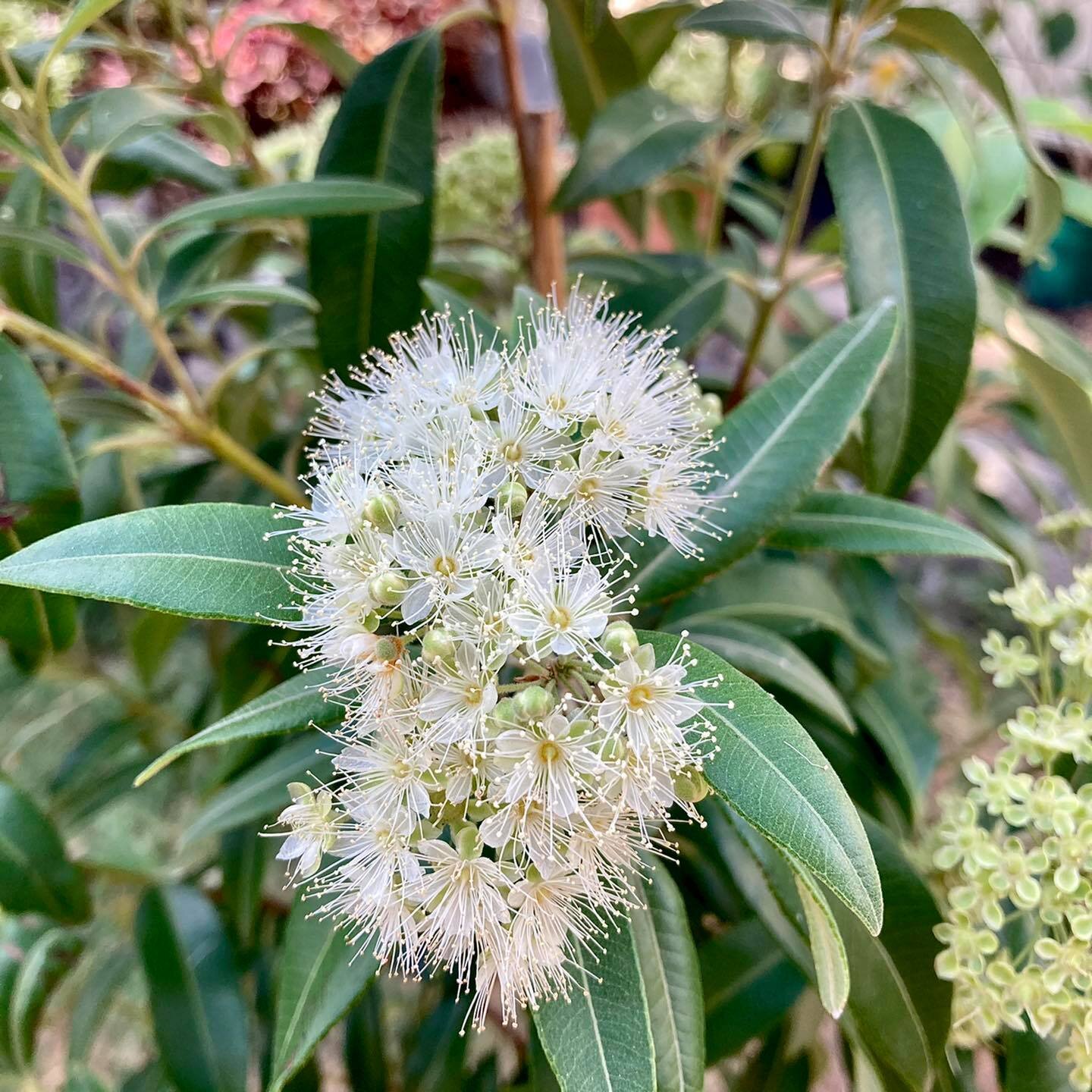
This tree comes “pre-decorated” with its showy flowers at this time of year. Even after flowering, the bracts remain stunning, adding a natural festive flair. Its vibrant appearance and low-maintenance nature make it a perfect Christmas tree option.
Phyllanthus cuscutiflorus
This dainty native features soft, delicate foliage and tassel-like flowers that resemble fairy lights hanging from its stems. It naturally forms a loose Christmas tree shape, though light trimming can enhance its density. Growing to about 3 metres, it thrives in various conditions, from full shade to full sun, and tolerates most soil types. While it prefers regular watering, it can handle some neglect once established. This charming plant is a delightful addition to any festive display.
Taking Care of Living Christmas Trees
Living Christmas trees add a beautiful, sustainable touch to your home during christmas, but they need a little extra care to thrive.
Here’s how to keep your tree healthy during and after the holidays:
Watering Is Key
The most common reason living Christmas trees fail is under-watering. This often happens because we worry about wetting the floors or presents. To avoid this, invest in an extra-large saucer or a planter (a pot without drainage holes designed to retain water). Check the soil regularly, and keep it moist but not waterlogged.
Limit Indoor Time
Don’t keep your tree inside for too long—living trees are best suited to outdoor conditions. A few weeks indoors is fine, but any longer can stress the plant. Once the holiday season ends, it’s time to transition your tree back outside.
Reintroducing Your Tree to the Outdoors
When returning your tree outdoors, it’s important to do so gradually:
Start in the Shade: Place the tree in a shady spot for two weeks to allow it to acclimatise.
Fertilise: Apply Organic Link slow-release organic fertiliser and fortnightly liquid feeds with Plant Care to encourage recovery and growth.
Transition to Sunlight: After the initial two weeks, move the tree to a part-shaded spot for another fortnight.
Full Sun: Finally, move it to a sunny position where it can thrive year-round.
Watering: Water according to the weather, one big drink every few days is better than lots of little drinks.
This year, why not buy a Living Christmas tree. Just remember to choose a plant that will bring you and your family years of joy and let the kids do the decorating, while you sit back and enjoy an egg nog (or three)!

Gardening is a Learning Curve
Rain and humidity can create havoc in the garden—think weeds, pests, yellowing plants, and fungus. This guide shares practical strategies to adapt to wet weather, from liquid fertilising weekly with adjusted ratios to managing pests with neem oil and controlling weeds organically. Embrace the unpredictability of gardening by evolving your plant choices, trimming, mulching, and learning to work with Mother Nature.
Sometimes gardening can be really enjoyable … who has been loving all this rain? Do your gardens look lush and vibrant?
Sometimes gardening can be really annoying… who has been cursing all this humidity? Do you some of your plants look a little wilted, yellowing off, die back, dropping dead, getting rust, inundated with caterpillars, snails, slugs, grubs in lawns……. The list goes on
Humid summers and deluges of rain can lead to any all or more
death or near death for many western Australian natives like Adenanthos sericeus (Woolly Bush).
Lavenders looking a little yellow on the inside
Daisy’s almost rotting away
Black spot on roses becoming so bad that it’s easier to just take off every leaf!
Fungus on gerberas, begonias and cucurbits
Having lush green lawn one day and nothing the next, due to lawn grubs
Having beautiful plants that were taking off due to the rain disappearing overnight due to large amounts of snails, caterpillars, slugs, mites, aphids or really any chewing, sucking insect.
Plants that were thick lush and green, now starting to yellow off
Weeds everywhere
leaf burn because its overcast and rainy one day and 40 degrees the next
the list goes on really
What to do
While there is so much rain around I tend not to granular feed with granular fertilisers like my Organic Link. Most of my garden is on a slight slope. If I granular feed and we get 100mls or rain most of it ends up down on the kerb… So I am saving the granular feed until the deluges of rain are over.
But I know my plants are struggling and need some get up and go.
So I have given everything a slight trim, added compost and organic mulch where possible and I have upped my Liquid Fertilising Game.
What’s Upping my Liquid Fertilising Game look like?
While there is so much rain about I am liquid fertilising weekly and alternating my products. So for instance one week I may use Triple Boost and Neem oil, the next I may use Plant Care and Neem Oil, the next I will use Potash and Silica. As I am fertilising weekly I have reduced the ratio of liquid fertiliser. For example if a brand says to use 10mls per lt I am using 5ml per lt. Once the rain becomes regular or slows down a little I will go back to liquid fertilising fortnightly. I find adding the neem helps with my insect infestation.
Everything gets liquid fertilised my gardens, my lawns, my indoor plants and my potted plants.

You can imagine my Birchy is getting a real workout at the moment; I’d be lost without it.
It seems kind of simple - no chemical sprays to kill bugs, no sprays to stop fungus and accepting what plants don’t like deluges of rain and high humidity.
With the weather the way it is I can not stop the force of Mother Nature. Plants will get grubs, plants will get fungus, and plants will and won’t survive. My job as caretaker is to keep my plants as healthy as I possibly can and reduce the chance of large infestations of fungus and insects.
I have a range of exotics and natives in my garden. I have tried to stay away from a lot of the dry inland land western Australian natives and most of my natives are South East Queensland dry rainforest plants.
Some of my plants are thriving and some are just getting by. Some days lately I feel the same! The ones just getting by I am making decisions about Economic Thresholds and whether I could choose something better or if I accepted it will look ugly for a little while.
With weeds I use my hands, Slasher (an organic weed spray) and boiling hot water. The trick is to keep on top of it. Every week I am out there looking for more weeds to kill. Once they go to flower I have to start the whole process again, so I stay on top of it as much as I can.
With my lawn I try to stay on top of it too. Crazily enough mowing once or twice a week takes me less time than mowing once every fortnight. I mow with a catcher to stop the spread of weed seeds. For more help with Lawns check out my Lawn Challenge
Weather Events can be unpredictable. What we experience this year, will probably be different to what we experience next year. Gardening is a learning curve and our gardens should be constantly evolving.
How do you garden in weather like this?

Get your Garden Party Ready!
Hosting Christmas at your place this year? Get your garden party-ready with this quick and practical guide. Start by decluttering and tidying your lawn for a neat appearance. Trim plants lightly, remove dead flowers, and mulch for a polished look. Add instant festive colour with ready-made flower pots or hanging baskets. With these simple steps, your garden will be ready to impress your guests!
So Christmas is at your place this year and your garden isn’t up to the Karen’s in your family standards?
Don’t worry it’s never too late to start!
Here’s my Quick Guide to Getting your Garden Party Ready!
Do a general clean up and Get rid of rubbish
Been putting off that dump run? Do it now. Have a good look around and get rid of the junk and clutter. No one wants your collection of black plastic pots or broken garden gnomes. Whatever annoys its time to get rid of it.
Tidy your lawn
Even if your lawn is patchy and weed infested a quick zip around with the mower and whipper snipper can make it look like a green bowling green! I find in this weather mowing regularly with a catcher on can help keep your lawn tidy and lush. If you need more information on keeping a healthy lawn check out my LAWN BLOG
Tidy up your plants and garden
As soon as you can, take a wander around the yard and trim anything that looks ‘yuk’.
If you have formal hedges or climbers give them a light trim to neaten them up. Now is not the time to give everything a heavy handed trim, save that for after the parties!
Remove dead flowers and yellow leaves. If a plant looks really bad, maybe now is time to make the big decision to pull it out. Economic threshold for plants is a real thing!
All those pots with half dead annuals, it’s time to get rid of them. If you don’t have anything to replant in them, empty the old soil out into your garden and store empty pots neatly out of sight. If a potted plant looks unhealthy but you want to keep it, move it out of eyesight, and give it a feed with Organic Link and Triple Boost!
Fertilising, composting and mulching would go a long way in helping your gardens look bloomin’ lovely for Christmas Day. Mulch covers up a multitude of sins in the garden and empty spaces always seem full after mulching. Sugar Cane and rainforest pines, are great choices. Both are great for the soil and mulching helps keeps plants moist and weed growth is slowed, which is very helpful in this weather.

Add Colour
Unless you’ve been planning this for months, there really isn’t any time to be planting seedlings. Plus it’s just too wet and humid to be planting out plants with small root systems. Forever plants full of flowers are the way to go. If you’ve got spaces in the garden, a way to fill them up quickly is with a nice decorative pot full of flowers.
To make it a little easier on you Trevallan has ready made pots and hanging baskets that are already overflowing with flowers.
While you may not feel like gardening is in your skill set, there are many plants that want to show off their skills at this time of year! If you come into Trevallan you’ll be surprised with all the colour available. Pentas, Celosia, Angeloina, Hibiscus, Begonias, Buddleja, Gardenias, Crepe Myrtles, Ixoras, Anthuriums, Gauras...
If you are a little overwhelmed with choices, try using a colour theme to really make a statement. Either use all same coloured pots and different plants or chose similar coloured flowers like all reds and whites.
Never one to miss an opportunity to buy more plants and pots, even my table decorations are living plants! I love caladiums as they have brilliant red and green foliage and the popular red poinsettia always looks good.
The day before your party, do a last-minute clean-up (trim dead flowers). Make sure all the plants are watered. The last thing you want to be doing on the Party morning is running around watering wilting plants before guests arrive.

Enjoy partying in style and showing off your amazing gardening skills!

Caladium
Caladiums are grown for their beautiful leaves which appear in the warmer months from corms. The older and fuller in the pot or garden the better the leaf colour.
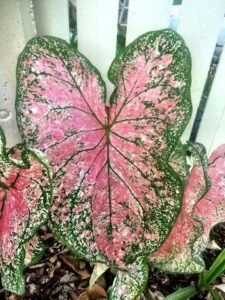
One of my all time favourite plants is the Caladium.
I have heard some people call caladiums garish, with their vibrant leaf colours, but I adore them.
I usually grow my caladiums in a shady spot in the garden, but I do keep a few in pots that I can bring inside during the warmer months, as it’s one of the best plants to have indoors during the heat.
Caladiums are known for their beautiful leaves which appear in the warmer months from corms. The older and fuller in the pot or garden, the better the leaf colour, so try not to split your caladiums too often.
Their foliage is absolutely amazing and constantly changing, plus they get bigger and better every year. Their leaves can range in size from about 10cm to about 50cm and the colour can range from transparent, pink, through to dark vibrant red with splashes of green. There are so many colour combinations I don’t think I could ever collect them all … I do plan on trying though!
To gift a Caladium means you are gifting the recipient joy and delight in their lives and this is exactly what caladiums do for me, bring me joy and delight.
As soon as they start to pop up from underground and show their foliage off, I bring the pots inside. They will survive inside in a well lit area and I find the darker the spot the less colour the foliage gets. They also don’t like cold houses, so try to find a warmer spot.
They adore the heat and humidity and they don’t require a lot of water, about once a week during the really hot times and the ones in the garden get watered and treated the same as all other plants.
I use them all throughout the house at this time of year to add colour to a sometimes solely green landscape.
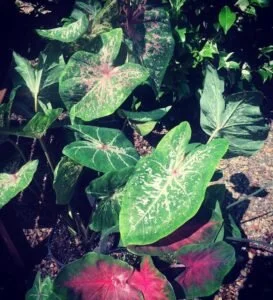
When the cooler weather approaches and they start to die down, I put the pot back outside in a warm shady spot and leave it alone until it pops up again next year.
If you are growing your Caladiums in the ground, I don’t ever pull them up when they die down. I find the older they get, the better they look. As soon as the nights start to warm up, these beauties will pop up from underground to surprise you with their colours and then as the nights start to get too cold they will slowly disappear again....
I try to fertilise my Caladiums in August, just before it starts to get warm, with Organic Link. Through their growing season, I alternate liquid fertilising them with Silica and Potash and Triple Boost.
I love the way caladiums can instantly lift my mood with their tropical feel and I think they add a colourful, magical touch to your garden.
Caladiums are available at Trevallan from November to March

Mastering Water-Wise Gardening for a Dry Summer
Creating a water-wise garden involves choosing the right plants, caring for the soil, and watering effectively. Healthy soil is essential for proper hydration, and deep watering promotes robust plant roots.
The warm days beckon irresistibly, coaxing you outdoors. No matter how hard you try, you simply can't resist the gentle caress of the spring sun.
You peer across your yard through half-closed, dreamy eyes, sensing the resurgence of life after winter's dormancy. Deciduous trees unfurl fresh buds, infusing vibrant colors into the landscape, while flowers burst forth in an explosion of hues.
The transformative power of nature on our mindset is undeniable. Even without the backing of scientific research, it's difficult to imagine anyone who doesn't relish the simple joy of being outdoors, whether it's sinking toes into sandy shores or wading through the lush, rainforest undergrowth. I wholeheartedly believe that spending time in nature is essential for nurturing our well-being
As the warm days coax us outdoors and we revel in the beauty of nature, tending to a garden can become a little daunting, especially as we approach the warmer months. Uncertainty may creep in, particularly concerning how much water our gardens will require.
However, here's the good news: it is entirely possible to cultivate a stunning garden that also conserves water.
Creating a beautiful, water-wise garden involves three key components:
Selecting the Right Plants: Assuming you've already chosen the appropriate plants for your space, this step ensures that the plant selection aligns with your local climate and water availability.
Providing Proper Soil and Plant Care: To achieve a water-wise garden, it's essential to nurture your soil and plants optimally. This includes enriching the soil with organic matter, mulching to retain moisture, and practicing prudent pruning and maintenance to promote plant health and water efficiency.
Watering Wisely: The final piece of the puzzle is watering correctly. This involves understanding your plants' water needs, implementing efficient irrigation methods, and adhering to watering schedules that prevent overwatering while ensuring your garden thrives.
By addressing these three components, you can cultivate a stunning garden that conserves water and thrives in harmony with your local environment.
Nurturing Your Soil and Plants
Just as a garden is a dynamic, ever-evolving landscape, it requires a steady infusion of organic matter to thrive. Organic matter serves as the lifeblood of fertile, productive soil, playing multiple vital roles in supporting plant growth. It acts as a nutrient reservoir, fosters soil structure, enhances nutrient exchange, retains moisture, prevents compaction, reduces surface crusting, and promotes efficient water infiltration into the soil.
To infuse your garden with organic matter, consider incorporating:
Organic Compost: Whether homemade or store-bought, organic compost is a reliable source of organic matter.
Organic Mulches: Options like sugar cane, rainforest fines, and tea tree mulch not only conserve moisture but also break down over time, enriching the soil.
Organic Fertilisers: Use these to provide additional nutrients as needed.
In our gardens, we value the addition of Searles Compost, a registered organic compost specifically designed to jumpstart new plant growth and rejuvenate existing garden beds. Additionally, we recommend remulching with high-quality organic materials, such as sugarcane or one-inch hoop bark, every 12 to 18 months. This not only reduces water loss through evaporation by up to 73% but also continuously reintroduces organic matter into your soil, bolstering its water-retention capacity.

Ensuring Soil Hydration and Plant Health
Sometimes, despite our best efforts, the soil in both pots and garden beds can become hydrophobic. In such cases, soil wetters become a crucial component of maintaining a water-wise garden. These products facilitate water penetration to the plant roots, enhancing the soil's ability to absorb moisture and nutrients. This, in turn, fosters healthier and stronger plant growth. Soil wetters should be applied to lawns, gardens, and potted plants. At Trevallan, we offer a variety of soil wetters to suit different gardening needs.
The Key to Plant Health
The next step in achieving a water-wise garden is ensuring the health of your plants. Unhealthy plants demand more attention and resources. Consider using a complete organic fertiliser, such as Organic Link, every three to six months. These fertilisers promote robust, deep root systems that help plants endure growth phases, heatwaves, and dry spells.
Additionally, a fortnightly application of liquid organic based fertilisers like Triple Boost, Potash and Silica will further fortify your plants, contributing to their strength and vitality. Liquid fertilisers are applied directly to the plant's foliage and offer benefits such as reduced wilting, resistance to windburn, and heightened resilience in poor soil conditions. Your plants become more robust and less susceptible to pest infestations.
Effective Watering for Healthy Soil and Plants

Once your soil is in good health, proper watering is the key to maintaining a thriving garden. The most efficient approach is to install a high-quality watering system (using drip and misters as well as moisture sensors) and consistently use it.
However, if you prefer hand watering, follow these steps: water your garden as usual, then return approximately 30 minutes later to check the depth of moisture penetration. It's essential to ensure that the soil is adequately wet down to a depth of at least 30cm. If not, you'll need to water again, ensuring proper saturation.
Regularly providing a thorough, deep soak for your plants promotes the development of deeper and stronger root systems, enhancing their resilience during dry periods.
Your garden can survive or thrive this season, it’s up to you!

Extreme Weather Plant Protectants
When the weather swings to either extreme, freezing mornings or relentless heat, I put a protective coat on my plants. For me, that coat is Silica and Potash or Envy.

Hopefully my silica and potash spray works better than using my good coats
Once the cold mornings start, I feel like I should be going out and putting a big winter coat on some of my plants. In summer I want to go put a big Sombrero on all my plants.
The reality is, plants don’t just struggle in cold conditions, they also suffer through heat, dry winds, intense sun and sudden temperature swings. In Ipswich, it’s often not just cold or just hot, but the constant stress of moving between extremes.
We don’t have a big coat and hat for our garden so there are two products that work like a protective layer in both hot and cold conditions, Silica and Potash and Envy.
How does Silica and Potassium help with Extreme Weather Protection?

Silica and Potash by Plant of Health is product we use at Trevallan
Silica (Si)
Role in Protection:
Cell structure strengthening: Silica deposits in plant tissues strengthen cell walls, helping prevent cell rupture caused by ice crystal formation in cold conditions and cell collapse or scorching during extreme heat.
Stress tolerance: Silica improves overall stress tolerance by helping plants regulate internal processes more efficiently, increasing resistance to cold stress, heat stress, drought and rapid temperature fluctuations.
Water retention: Silica helps plant cells retain water, buffering against dehydration caused by freezing temperatures as well as moisture loss during heat, dry winds and high evapotranspiration.
Potash (Potassium, K)
Role in Protection:
Osmoregulation: Potassium regulates water movement within plant cells, helping maintain cell turgor pressure. This reduces the risk of cell damage during freezing conditions and helps plants stay hydrated and functional during heat stress and dry conditions.
Enzyme activation: Potassium activates enzymes involved in metabolism and stress response pathways, allowing plants to better manage cold stress, heat stress and environmental extremes.
Carbohydrate movement: Potassium aids in the transport of carbohydrates throughout the plant. In cold conditions, these carbohydrates can act as natural antifreeze agents, while in hot conditions they support energy availability, recovery and stress resilience.
Combined Benefits of Liquid Silica and Potassium for Extreme Weather Protection
Silica is often more effective when applied as a foliar spray. This is because silica is less mobile in the soil and can be better absorbed directly through the leaves, allowing quicker and more targeted uptake by the plant.
The same applies to potassium, foliar feeding provides a rapid way to deliver potassium to plants, particularly during critical growth stages or periods of environmental stress.
Together, silica and potash support plants through both cold and hot weather extremes by improving the physical and biochemical stability of plant cells. Stronger cell walls, improved water regulation and more efficient internal processes help plants cope with frost, heat stress, drying winds and sudden temperature fluctuations, while also improving overall plant health and resilience.
At Trevallan, we use Plant of Health’s Potash and Silica (certified organic and safe to use across your whole garden). I liquid feed the garden centre about once a month with this product. I add the liquid fertiliser to Birchy, and the entire garden centre is fertilised in around 20 minutes.
What is Envy?

Envy is a frost protectorent and anti transpirant.
Envy is a frost protectant and anti-transpirant that supports plants through both cold and hot weather extremes.
Envy is designed to prevent frost damage by providing a physical and/or chemical barrier that reduces ice nucleation, the process by which ice crystals begin to form from supercooled water, a key factor in frost damage on plant surfaces.
Once sprayed over a plant’s foliage, Envy can increase frost tolerance by up to 4°C.
The same protective film also helps plants during hot, dry and windy conditions. Envy can substantially reduce moisture loss by up to 50%, helping to protect foliage from sunburn, windburn and dehydration during periods of heat stress.
Envy does not hinder plant growth or photosynthesis. It forms a semi-permeable membrane over the leaf surface that still allows the plant to breathe. It is non-toxic, pH neutral, and will biodegrade in sunlight.
Envy is best applied as a foliar spray and should be reapplied as new growth emerges to maintain protection during changing conditions.
Both products ‘Silica and Potash’ and ‘Envy’ can be applied as a foliage spray - mix the product with water and spray over the plant’s foliage.
Both need to be applied regularly for best results.

Summer Sun, Winter Shade
Discover a list of plants that thrive in spots with winter shade and hot afternoon sun in summer. From border plants to those exceeding 1m, find suitable options and care tips in this gardening guide.
Are you seeking plants that flourish in locations with limited sunlight during winter and intense afternoon sun in summer? Read on to explore a list of plant recommendations based on personal experience, along with practical care insights for these unique conditions..
Now there are a few plants that I can recommend that will only stay a metre but others I have to give honourable mentions too as they are very trimmable and usually look better when trimmed. Now this is not an exhaustive list. I am sure many people out there could add to it. It’s just ones I personally have successfully grown.
Border Plants and Groundcovers
Gardenia Radicans and Trachelospermum Tricolour shine as potential border choices. While the latter is typically used as a groundcover, its adaptability makes it an excellent loose box hedge candidate.
You could also consider the charming Kalanchoe and select varieties of Azaleas (the light series is an excellent choice). Grasses like Liriope and Dianella also offer a visually pleasing solution.
Reaching the 1m Mark
For spots requiring plants around the 1m mark, explore the elegance of Carissa 'Desert Star,' the compact Murraya Min-a-Min, and other dwarf forms of Murraya. Acmena Allyn Magic and Syzygium Little Denise also make the list, alongside the vibrant Coleus and enchanting Gardenia True Love.
Taller Options with Trimming Potential
While exceeding the 1m height, Camellia sasanqua, Magnolia figo (port wine magnolia), Magnolia Coco, and Brunfelsia latifolia (yesterday, today and tomorrow) can be judiciously trimmed to suit the available space. Syzygium 'Cascade' offers another option in this category.
Care Tips for Success
To ensure these plants thrive, adopt a few care practices. After winter, use a complete organic fertilisers like Organic Link coupled with liquid fertilizers like Plant Care to fortify the plants for upcoming heat. Optimal soil cultivation plays a pivotal role in fostering robust plant health while simultaneously mitigating plant stressors and reducing water needs. To this end, the incorporation of compost, utilization of soil wetting agents, and application of mulch (preferably organic like sugar cane) emerges as prudent practices.
During the transition from colder to warmer temperatures and the shift from shade to sun, swift changes in temperatures may lead to leaf burn on plants. However, this effect tends to diminish as plants progressively acclimate to new conditions.
This compilation of plants tested in conditions with no winter sun and intense summer afternoons offers an array of choices for your space. With proper care and understanding, you can cultivate a vibrant and resilient garden, transforming even challenging areas into thriving plant havens.

Native Daisy
Brachyscome multifida is endemic to Australia and a brilliant free flowering hardy ground cover daisy. This cute little daisy has fine feathery foliage and can grow to about 50cm diameter and about 40cm high.

Brachyscome multifida is endemic to Australia and a brilliant free flowering hardy ground cover daisy.
This cute little daisy has fine feathery foliage and can grow to about 50cm diameter and about 40cm high.
It prefers full sun in good quality free draining soil. The flowers usually appear from mid winter until summer but they can spot flower continuously if conditions are right. The flowers are usually shades of pinks and purples.
They don’t mind the cold or a little bit of dry but do need a top up water.
Fertilise then seasonally with a good quality complete organic fertiliser like Organic Link. They also appreciate a liquid fertilise with Triple Boost to keep them powering on.
I think these guys make great fillers in gardens and work like a living mulch. I also have seen them tumbling out of urns and as hanging basket specimens for full sun areas.

I think these guys are really cute and would work well in a cottage or formal landscape. Sometimes we all need a daisy in our lives.

Brighten your Garden with Oranges, Yellows and Pinks.
Ixoras have dark green leathery leaves and produce large clusters of tiny flowers in the summer and autumn. They can be a little hard to grow but are worth the effort
Ixoras.
This is an I love it or I hate it plant.
My mum loves them. I must admit I verge on the opposing side. So, why on earth would I write about them and stock them at Trevallan if they are on my not so favourite list?
Well as with many things these plants have grown on me over the years and as with many plants there seems to be a time and a place for them.
Ixoras are native to the tropical and subtropical areas throughout the world, with many of them in Tropical Asia. These plants typically can't handle frosts so if you are in a frost prone area these may not be for you. Some Ixoras are more prone to being cold affected while others can handle a little bit of cold.

Ixoras have dark green leathery leaves and produce large clusters of tiny flowers in the summer and autumn. The more common Ixoras usually have orange, gold, pink or red flowers. Ixoras prefer acidic soil and usually like a little shelter from our blazing summer sun. In saying that I have seen many gorgeous Ixoras growing in full sun in a commercial setting (shopping centres). They don't mind being in pots or the ground.
I find the four most popular Ixoras are 'Prince of Orange', 'Pink Malay', dwarf orange and dwarf gold. Ixora williamsii is also popular as it has red flowers but it really dislikes the cold so is not commonly grown in Ipswich.
Prince of Orange has fiery orange flowers and can grow around two meters tall. The dwarf orange and yellow grow to around 1/2 metre. These look amazing in pots but I have seen them in gardens trimmed into a hedge and they look stunning when in flower. You can hardly see their green leaves.
My favourite Ixora is Pink Malay. Why do I love it? Not just because it gets covered in pink flowers but because it is so hardy. This Ixora is absolutely amazing; growing to around a metre it can handle full sun and shade. It can grow in pots or the garden and I have seen it successfully growing in a shopping centre car park. Yes that's right, a shopping centre car park. A place that has no good soil, no mulch, no care, only rain fall and it looks glorious. This is why I love this plant.
Ixoras like all my plants get fertilised with Organic Link and Triple Boost and neem oil. I use Searles Platinum Potting Mix for pots and Searles' garden soil for gardens.
There is a grub that likes to destroy your Ixora flower heads. There are a few ways to combat this. As soon as the buds start appearing I begin to mix neem oil in with my fortnightly Triple Boost. If it gets really bad I will spray with Dipel. I will sometimes use Searles' Bug Beater. Eco-oil would also work.
Sooty mould can also form on the leaves. This can be caused by scale and ants. Give your plant a really good soil drench and use a soil wetter if necessary. Fertilise with Organic Link and spray with neem oil or Eco-oil. In a fortnight or so you should be able to hose off the soot and hopefully the ants would have dissipated.
This autumn and summer brighten up your dull spots with shades of orange, yellow and pink.

Brilliant Australian Native Plant
Summer Red Eucalyptus would have to be the best flowering Australian Native gum tree for suburbia.
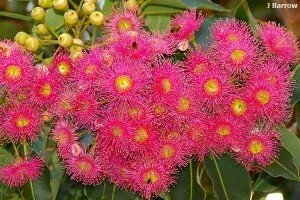
Photo by Brian Walters from the Australian Native Plants Society
Summer Red Eucalyptus would have to be the best flowering Australian Native gum tree for suburbia.
Before this range was released if you wanted a flowering gum tree you had to just go out and buy one and hope for the best. Sometimes the flowers turned out red and other times pink, but quite often it was an insipid white which you didn’t really want anyway. Plus the plant was straggly and had to be kept heavily trimmed to look nice.
The good news is that it’s now possible to buy flowering gums with predictable flower colours. Specially bred for the home garden, the new plants are hybrids between Eucalyptus ficifolia and Eucalyptus ptychocarpa, grafted on to Eucalyptus intermedia rootstock.
Eucalyptus ‘Summer Red’ produces masses of mid-pink to red flowers in summer and grows quickly to around 5 metres. It has large glossy green leaves and the new foliage is an attractive bronze colour. The trees should do well in most areas of Australia and will tolerate light frosts and drought.
Eucalyptus ‘Summer Red’ would be my ideal gum tree for the home garden. It is the perfect shade tree, with a height and spread of around 5m. It can be kept easily pruned and is even suitable for large pots.
Make a bird happy today and plant a Eucalyptus ‘Summer Red’!
It can be trimmed after flowering and I find its best to fertilise them at least three times a year with Organic Link.

Roses are Red
The rose has long been a source of fascination and meaningfulness for cultures around the world. I have never claimed to know the secrets of growing roses in a climate where for about six months of the year we have what feels like 100% humidity but here are a few of my tips.
The rose has long been a source of fascination and meaningfulness for cultures around the world.
Cleopatra was believed to have covered the floor of her palace room with roses before Mark Antony visited for in those times anything which was said "under the rose" was deemed to be a secret.
For many of us Queenslanders though how to keep roses looking amazing feels like a state secret.

I often stare in awe at the pictures in magazines of roses elsewhere in Australia. How dare they have the climatic conditions to grow these plants successfully?
I have never claimed to know the secrets of growing roses in a climate where for about six months of the year we have what feels like 100% humidity.
Many rose growers out there will probably have a small heart attack at my way of growing roses but that’s ok, my way is the right way for me and maybe if you’ve never had any success in the past it may become the right way for you.
The first thing I needed to realise was that my roses may never look like they do elsewhere. The humidity we suffer is the cause of most rose problems. No amount of sprays, fertilisers or correct planting techniques will change the problems humidity brings.
To combat most of the rose problems such as black spot, fungus, bud worm that occur during the warmer months I trim and fertilise.
I don’t spray.
During the really humid months most of my roses look like bare thorny sticks. I find removing all the affected leaves, trimming back the plant and then fertilising with a slow release complete organic fertiliser like Organic Link works fantastically.
I always trim my roses like I am cutting the flowers off for a long stemmed vase. I personally can’t stand long straggly bushes so I make sure all my roses get a good prune continuously throughout the year. I also find a good dose of granular Sulphate Potash at least twice a year, Winter and Summer, helps with fungal problems and boosts blooms.
After pruning you can use a product like Steriprune which is designed to protect wounds against infections and die back. Come the cooler months and my roses are thick and lush and full of flowers. The few leaves that do get black spot or mould just get pulled off and when the flowers die, I still trim the stem right back like I am cutting it for a long stemmed vase.
To keep roses healthy and insect free I try to regularly liquid fertilise them with Rose Triple Boost and neem oil, fortnightly is ideal (but not always possible). When black spot is rife I alternate between the Rose Triple Boost and Silica and Potash Liquid fertiliser (certified organic).
Another organic alternative for black spot and rust is eco-fungicide. Eco-fungicide is a registered organic fungicide for the control of powdery mildew, black spot and rust in many plants including tomatoes, zucchini, roses, grapevines and geraniums. It attacks existing fungal infections and kills external fungal growth within minutes. Eco-fungicide also leaves an invisible protective coating that prevents new spores from germinating.

This Rose quote is so true even when growing roses. You must put up with all the disease, insects etc but it is well worth it when they bloom
To control insects some people like to use a pyrethrum based spray or neem oil.
All my roses are in full sun in pots and in the ground. I use Searles Platinum Potting Mix for the pots and Searles' Garden Mix for the ground. I mulch with Sugarcane.
Roses do not have the prettiest bush and they can sometimes seem a bit fussy but the reward of the rose is well worth it all.